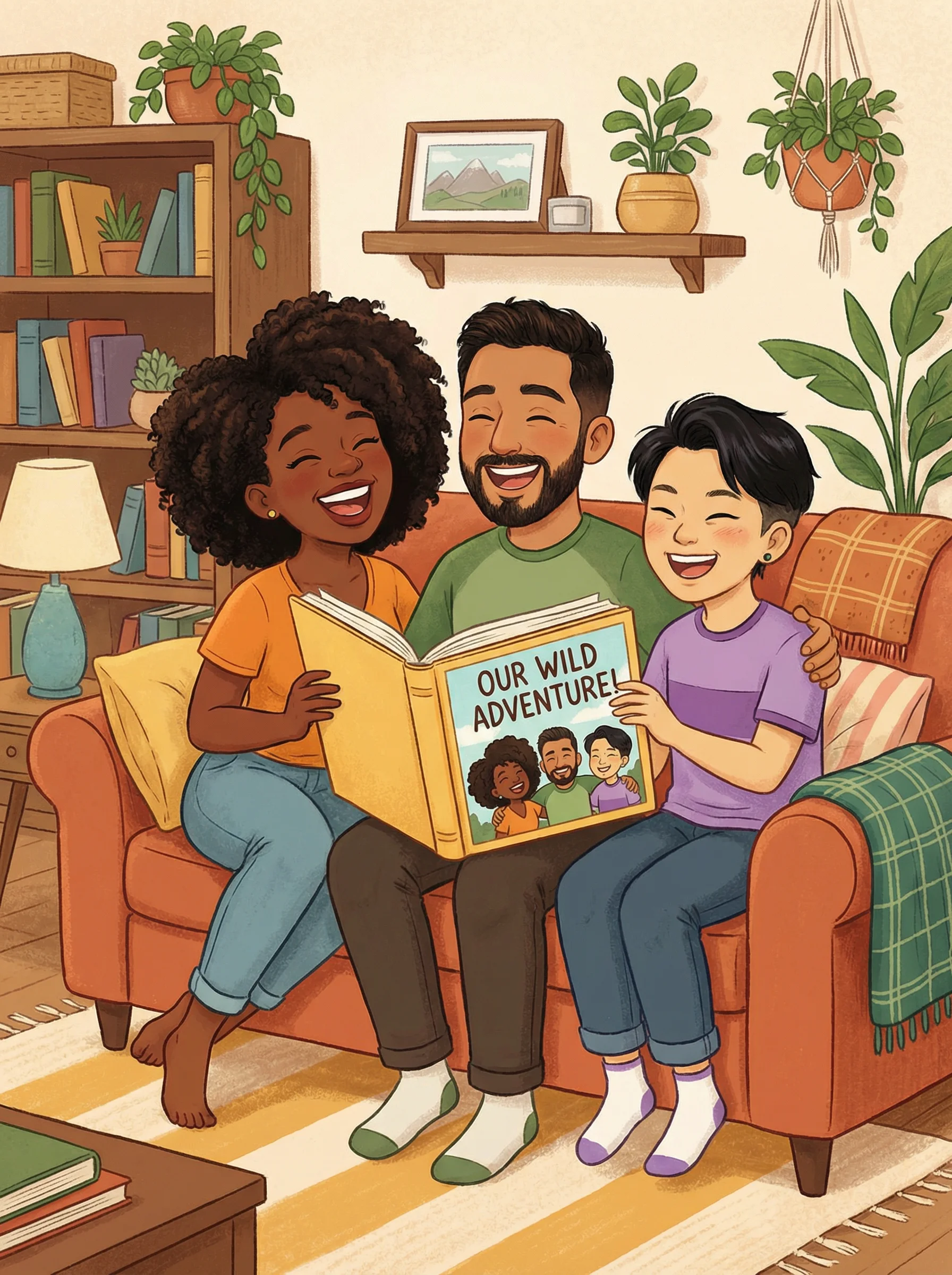
The critical difference: real personalization vs. name swaps
The first and most important distinction between AI story generators is depth of personalization. Some platforms offer superficial customization: they take a template story and swap in your child's name. This is cheaper to produce, but it's not really personalized.
The best AI story generators actually rewrite the narrative based on who your child is. They incorporate specific details—personality traits, interests, family structure, hobbies, fears, dreams—into the story's logic, not just its pronouns. Your child doesn't just appear in the story; the story is written around them.
This matters because there's a psychological difference between seeing your name in someone else's story and experiencing a story that was actually written for you. The latter is what changes how children feel about reading and themselves.
What to ask: Does the platform ask detailed questions about your child's personality, interests, and situation? Or just a name and age? The more granular the questions, the more genuine the personalization.
Illustration quality and visual consistency
A great story loses impact if it's paired with mediocre or inconsistent illustrations. AI image generation has matured enough that professional-quality illustrations are possible—but not guaranteed. The gap between top-tier and bottom-tier AI story generators is often purely visual.
Look for platforms where:
- Character consistency matters: The protagonist looks consistent across multiple pages. Inconsistent character appearances are jarring and undermine immersion.
- Art style is intentional: The illustrations match the tone of the story. A whimsical adventure should look playful; a comforting story about grief should feel warm and sensitive.
- Detail quality is high: Small visual details matter to children. Are the illustrations detailed enough to merit re-reading and exploration, or are they rushed and generic?
- Diversity in style options: Can you choose whether you want watercolor, cartoon, realistic, or stylized illustrations? Variety lets you match the story's mood.
Age-appropriate content filtering and safety
A critical feature that separates responsible AI story generators from careless ones is content filtering. Your AI generator should:
- Respect age appropriateness: A story for a 4-year-old should differ significantly from one for a 12-year-old in vocabulary, themes, and narrative complexity.
- Filter inappropriate content: The platform should have guardrails preventing violence, sexual content, or scary material inappropriate for the age group.
- Handle sensitive themes thoughtfully: If your child is processing grief, family change, or anxiety, can the platform create stories that address these themes age-appropriately?
- Offer parental review: Some platforms let parents preview and edit stories before the child sees them. This is valuable.
Language support and bilingual capabilities
For multilingual families, this is make-or-break. Some AI story generators offer only English. Others claim to support multiple languages but deliver poor translations. The best offer native support for multiple languages and—even better—can create genuinely bilingual stories that weave between languages naturally.
What to look for:
- Native language support, not just translation after generation
- The ability to specify language preference or even bilingual mixing
- Quality that doesn't degrade across languages
- Cultural appropriateness for different regions
For families raising bilingual children, this feature is invaluable. A story that honors both of your child's languages reinforces both identities simultaneously.
Output format and usability
How will you actually use the story? This matters more than it seems.
- PDF format: Is the story downloadable as a print-ready PDF? This matters if you want a physical copy or plan to print professionally.
- Print quality: If you care about physical copies, does the platform offer professional printing? Some do; others require you to print yourself.
- Ease of sharing: Can you easily share the story with family? Can grandparents access and read a story created for their grandchild?
- Revision and regeneration: If your child doesn't like the story, can you request changes without paying again?
Pricing and value
AI story generators use various pricing models. Some charge per story. Others offer subscriptions. There's no universally "best" pricing, but there are red flags:
Red flags: Pricing that seems disconnected from quality. An extremely cheap generator might use lower-quality AI. Hidden fees that appear after purchase.
Good signs: Transparent pricing displayed upfront. Trial stories or previews so you can evaluate quality before committing. Clear refund policies if you're not satisfied.
Why ImaginaCuentos stands out
ImaginaCuentos is a strong option, particularly if you value personalization depth and bilingual support. The platform:
- Asks detailed questions about your child's personality, interests, fears, and dreams—not just name and age
- Generates truly personalized narratives where your child's specific characteristics drive the story
- Produces high-quality illustrations with consistent character design across pages
- Supports Spanish and English with genuinely bilingual capabilities
- Offers both digital and print formats
- Provides age-appropriate content filtering across different readiness levels
- Allows preview before purchase
See how it works to understand whether personalized storytelling fits your family's reading life.
Making your choice
The "best" AI story generator for kids depends on your priorities. If personalization depth and bilingual support matter most, ImaginaCuentos is excellent. If you want the cheapest option regardless of quality, look elsewhere. If you're focused purely on illustration quality, compare visual samples across platforms.
Most importantly: don't assume all AI story generators are equivalent. They're not. Take time to understand what each platform does well and where its limitations are. Your child's reading experience will be richer for it.
Start with a trial story if possible. See how your child responds. The best platform for your family is the one that creates stories your child actually wants to read, that make them feel seen and celebrated.