Understanding your story generator's inputs
The foundation of a great AI-generated story is thoughtful input. Most generators ask for the same core information: your child's name, age, character details, theme, and illustration style. Don't rush these choices. This is where you set the tone for the entire story.
Start with your child's age—this determines vocabulary complexity, sentence length, and story depth. A story for a 4-year-old needs simpler concepts and shorter narratives than one for a 9-year-old. Choose a specific age rather than a range when possible, as this gives the AI clearer guidance. The character information is equally important. Instead of just "a princess," describe: "a kind, curious princess who loves astronomy and wants to explore distant planets." Specificity transforms generic stories into personalized ones that genuinely capture your child's interests.
Choosing themes that matter
The best AI-generated stories address real parts of your child's life or interests. Consider what's happening now: Is your child starting a new school? Dealing with a friendship challenge? Learning a new skill? Discovering a passion for dinosaurs or space? These real-world anchors create stories with emotional resonance.
You can approach themes in two ways. First, problem-solving themes help children process challenges: "a story about a shy character making a new friend" or "a story about overcoming fear of the dark." These work when your child is experiencing something specific. Second, interest-based themes celebrate what your child loves: "an adventure with dragons and magic" or "a story about a scientist solving a mystery." These work when you want to encourage existing passions or introduce new ones.
Avoid generic themes like "a fairy tale" or "an adventure." Instead, combine interests with meaning: "a story about a brave girl who builds a treehouse to help animals." This specificity guides the AI toward more engaging narratives with actual character motivation.
Illustration styles: finding your aesthetic
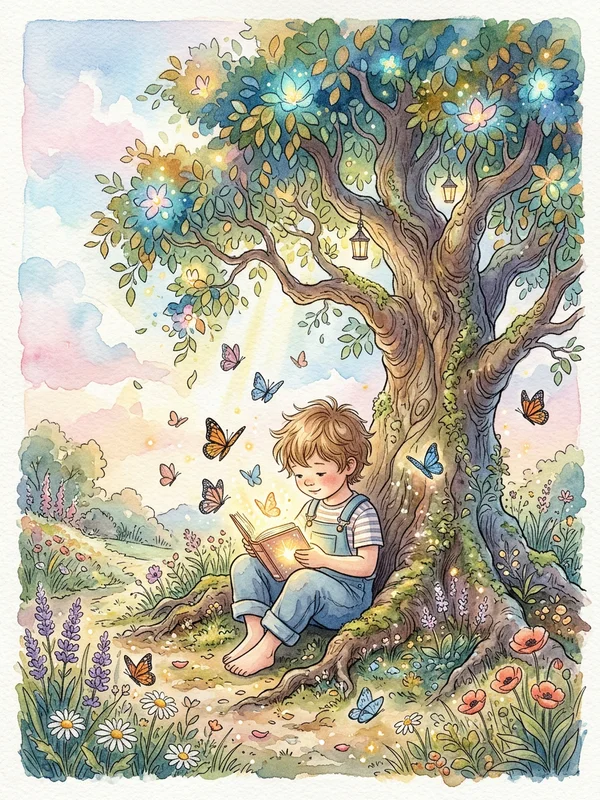
Illustration style dramatically affects how a story feels. Before creating your full story, preview different styles if your generator offers it. Cartoon styles feel playful and lighthearted, perfect for younger children. Watercolor styles feel gentler and more artistic. Manga or comic book styles appeal to older kids and action-oriented stories. Storybook classic or Ghibli styles create a more whimsical, artistic feel.
Match the style to both the story theme and your child's preferences. An action-adventure story works well in comic book or manga style. A quiet, reflective story suits watercolor or storybook classic. Your child's favorite movies and books are good clues—if they love animated films with a particular aesthetic, that style might resonate with them.
Creating detailed character descriptions that work
Generic characters produce generic stories. Detailed characters produce memorable ones. When describing your main character, include physical details, personality traits, and motivations.
Instead of: "a boy" — try: "a curious 7-year-old boy named Marcus who wears glasses, loves building things, and dreams of becoming an inventor."
Instead of: "a magical creature" — try: "a young phoenix with shimmering golden feathers who just hatched and is learning to fly, a bit clumsy but incredibly brave."
The detail helps the AI generate a story where this character actually acts like themselves, makes decisions consistent with their personality, and faces challenges that matter to them. Some generators let you add companion characters or family members—include these! A story about "Sofia and her little brother exploring a haunted library" has more dynamic potential than a solo adventure.
Getting the best results: quality tips
After you've input your information, most generators create a preview. Read it before approving the final illustrated version. Look for these markers of quality: Does the story make sense, with clear cause-and-effect? Is the character consistent—do they act according to the personality you described? Does the story have a beginning, middle, and satisfying end? Is the language appropriate for your child's age?
Some generators, like ImaginaCuentos, let you see a 5-page preview before committing to the full book. Use this opportunity to check that the direction feels right. If something seems off—perhaps the tone doesn't match what you expected, or the story takes a direction you don't like—most platforms let you regenerate or provide adjustments.
Don't aim for perfection. AI-generated stories won't have the literary polish of award-winning picture books, and that's okay. What they offer is personalization and uniqueness. A good AI story is one that engages your child and makes them feel seen.
Avoiding common mistakes
New users sometimes make choices that result in less engaging stories. Avoid being too vague: "a fun story" generates less interesting content than "a story where a clever raccoon outwits a tricky fox." Don't overcomplicate—give the AI clear constraints. Instead of "include dragons, princesses, robots, and pirates," pick one or two elements so the story has focus. Don't ignore age recommendations—these exist because developmental appropriateness matters for engagement and comprehension.
Finally, don't expect perfection. If a story has minor issues—perhaps a word choice you'd change or a plot point that could be stronger—remember that imperfection is human, and this story is still uniquely created for your child. The goal isn't a perfect book; it's a meaningful experience that connects to your child's life and imagination.